
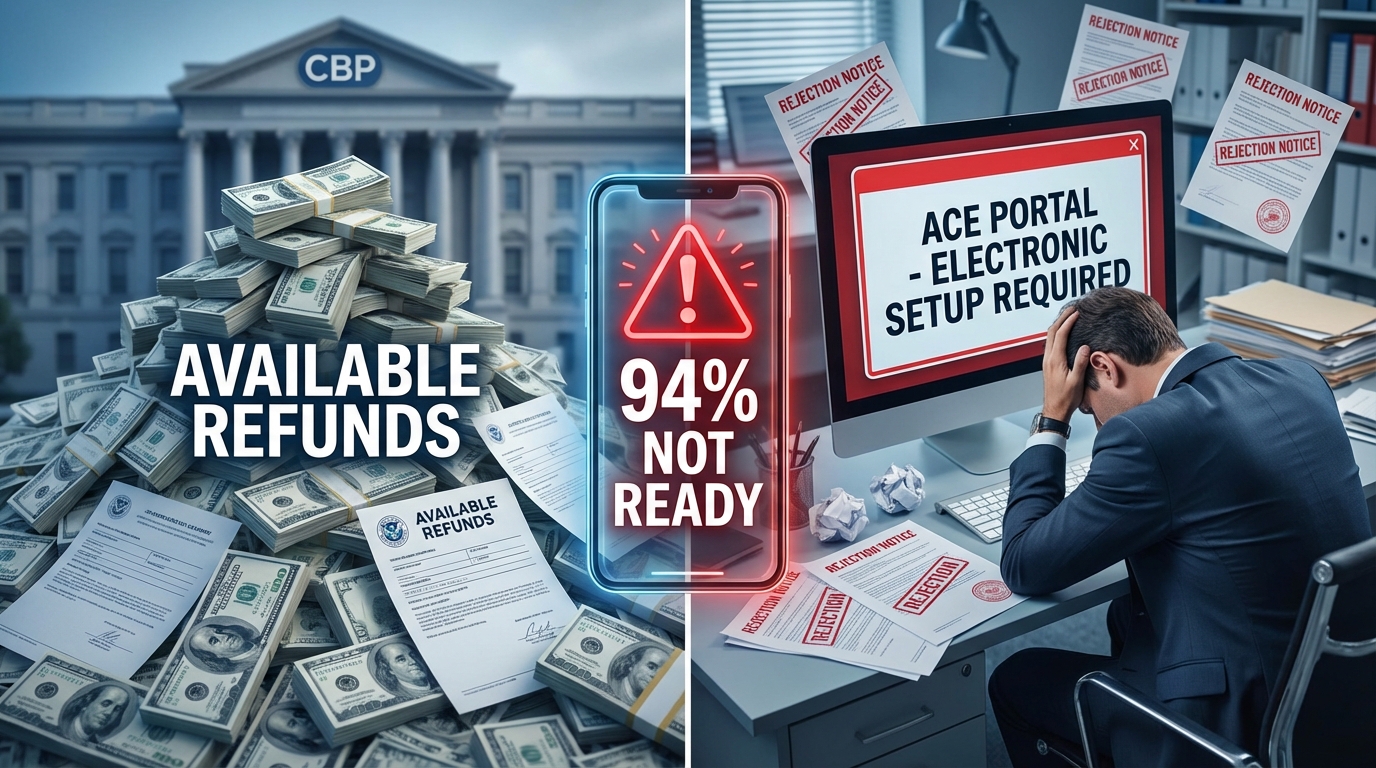
7,700 refunds rejected for 2,897 importers since Feb 6. Only 6.5% of eligible importers completed required ACE Portal electronic setup. $166B in refunds available but blocked by importer inaction.
Tariff refunds aren't delayed—they're being actively rejected because importers haven't completed the electronic setup required to receive them. According to new CBP data, 7,700 refunds have been rejected for 2,897 importers since February 6, 2026, when all customs refunds became electronic-only.
The problem isn't system delays. It's importer readiness. Of the 330,566 importers eligible for IEEPA tariff refunds totaling $166 billion, only 21,423—just 6.5%—have completed the required electronic setup in CBP's ACE Portal as of March 6, 2026.
The scale of unpreparedness is staggering. Nearly 310,000 importers who paid IEEPA duties cannot receive refunds because they haven't completed basic electronic authorization requirements. These aren't small players—this represents the largest customs duty refund event in U.S. history, covering 53+ million entry summary lines.
CBP's rejection data reveals the gap: while the agency processes refund requests, it cannot issue payments to importers who lack proper ACH authorization. Each rejected refund creates additional administrative burden and potential delays for unprepared businesses.
CBP eliminated paper refund checks entirely on February 6, 2026, making electronic payments through the ACE Secure Data Portal the only option. This wasn't a gradual transition—it was an immediate requirement that caught thousands of importers unprepared.
The timing coincided with the Supreme Court's IEEPA tariff ruling and subsequent Court of International Trade order requiring CBP to liquidate entries without these duties. What should have been straightforward refunds became bottlenecked by importer inaction.
Importers must complete two specific requirements in the ACE Secure Data Portal:
Without both elements completed and verified, CBP's system automatically rejects refund attempts. There's no manual override, no paper check backup, and no grace period.
The electronic setup requirement exposed a fundamental gap in importer compliance infrastructure. Many businesses that successfully navigate complex customs procedures haven't completed basic ACE Portal banking setup—often because they relied on brokers for most CBP interactions or simply weren't aware of the February 6 deadline.
Smaller importers face particular challenges. Unlike major corporations with dedicated trade compliance teams, many lack familiarity with ACE Portal navigation or the specific refund authorization process.
For prepared importers, electronic setup takes 15-30 minutes. The process involves logging into the ACE Secure Data Portal, navigating to the refund section, entering banking information, and completing verification steps.
However, first-time users often encounter authentication hurdles, forgotten credentials, or bank verification delays that extend the timeline to several days. CBP requires manual review for some banking information changes, adding potential processing time.
Rejected refunds don't disappear—they create a queue that importers must re-enter once they complete electronic setup. But each rejection adds administrative complexity and potential delays to an already strained system.
CBP is building a new system called CAPE (Consolidated Administration and Processing of Entries) expected within 45 days from March 6, but this timeline is secondary to the immediate need for electronic setup completion.
Importers waiting for refunds need to complete ACE Portal setup immediately:
The window for easy refunds is narrowing. As more importers complete setup and submit claims, CBP's processing capacity will face increasing strain. Early completion avoids the rush and potential system congestion.
For the 94% of importers still unprepared, the message is clear: tariff refunds are available now, but only for those ready to receive them electronically. The delay isn't on CBP's end—it's in your ACE Portal setup.

Stay up to date on tariff refunds.